
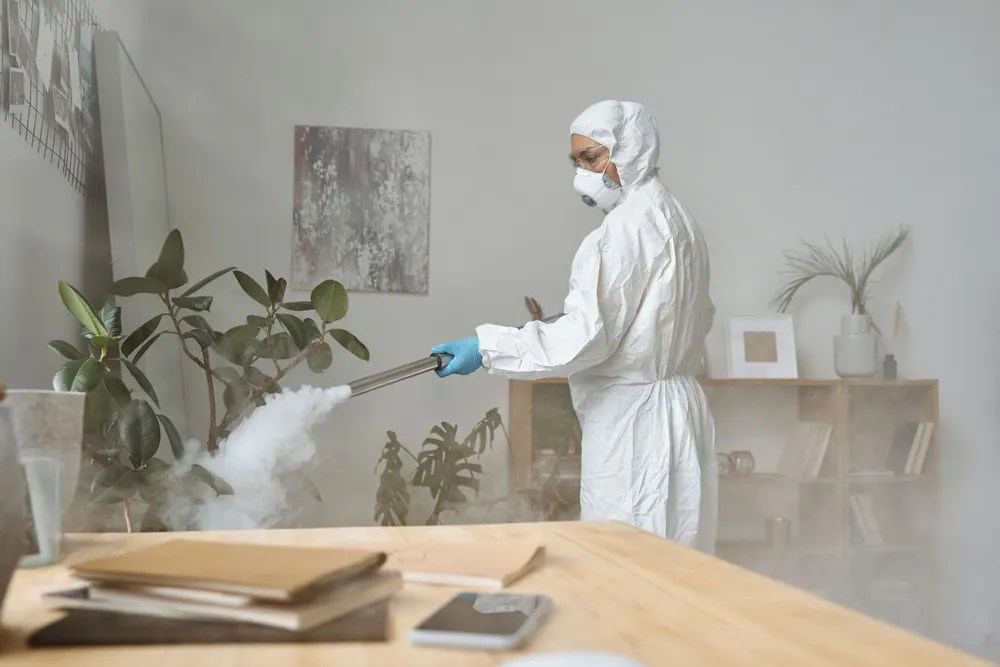
Pest control in Craighall is shaped by the Braamfontein Spruit and the suburb's big, old trees. Rats travel the spruit and the canopy, subterranean termites feed on old stumps and timber, mosquitoes breed in garden water, bees swarm into hollow trees and roof cavities, and wasps build under eaves. We inspect the whole stand and treat each problem at its source.
Craighall's setting
Craighall is one of the leafier suburbs on the Randburg side of the inner north, between Hyde Park, Dunkeld West and Craighall Park, with the Braamfontein Spruit running along its edge and the green belt of Delta Park not far away. Stands are generous and many are large, with established homes, often extended or rebuilt over the years, deep gardens, pools and very old trees: oaks, planes, jacarandas and big eucalyptus. Security walls and electric fencing are everywhere, but pests come in from above and below.
The spruit is a green corridor through the city, and wildlife, including rats, uses it to travel. The tree canopy links properties so closely that a roof rat can cross several gardens without touching the ground. And with trees that old, there's a steady supply of dead wood, hollow trunks and stumps.
The pests that matter in Craighall
Rats along the spruit and in the canopy
Brown rats live in the banks and vegetation along the spruit and visit gardens for compost, fallen fruit and pet food. Roof rats use the canopy to reach roofs and get in under eaves and through gaps around roof vents. We place lockable stations along the boundary closest to the spruit and around the house, trap in the roof where needed, and work through the entry points with you. See rat control in Randburg for more.
Termites in stumps, roots and timber
When a big old tree is felled in Craighall, the stump and the roots can feed a subterranean termite colony for many years. Colonies also live in the bases of living trees. From there, they find timber decks, pergolas, garden structures and eventually the house. Mud tubes on walls, hollow skirting and damaged door frames are the signs. Our termite treatments around Randburg carry a 5-year guarantee and a certificate.
Bees
Hollow trunks, wall cavities and roof spaces in large older homes attract honeybee swarms, especially in spring and early summer. Bees are important pollinators, so where possible we refer swarms to a beekeeper for removal, or handle them with one. If a colony has built comb inside a wall or roof, the comb needs to come out too, or it attracts new swarms and can drip honey into the ceiling. More on bee swarm removal in Randburg.
Mosquitoes
Pools that aren't run in winter, water features, bird baths and blocked gutters breed mosquitoes in summer, and the shaded gardens give them plenty of resting places. We find the breeding spots and treat the resting areas.
Wasps
Paper wasps build under eaves, in pergolas and pool-pump covers in late summer. We remove nests and treat the spot.
Our approach on a big stand
On a large Craighall property, the inspection is the most important part. We walk the garden to the boundary, look at the spruit side, the trees touching the roof, old stumps, the pool area, the outbuildings and staff quarters, and then the house itself, including the roof space. Then we put together a plan that covers the whole stand. You can stay at home; treatments are odourless and won't mark anything, and pets and children just keep off treated areas until dry.
What owners often get wrong
Assuming a bee swarm will simply leave, and then waiting. A resting swarm on a branch often does move on within a day or two. But a swarm that's moved into a wall or roof space is setting up a colony, and the longer you wait, the more comb there is to remove. If the bees are flying in and out of one hole, call early.
A Craighall tip
Have a tree surgeon cut back branches to at least a metre or two from the roof. In a suburb where the canopy is this dense, overhanging branches are the main way roof rats get onto the roof. It also cuts down on leaves blocking gutters, which stops mosquitoes breeding there.
What it costs and why
On large Craighall stands the property size makes a real difference. Rat control is priced on the number of stations and follow-ups. Termite treatment depends on the perimeter, any paving that needs drilling and the amount of timber affected. Bee work depends on whether it's a swarm on a branch or a colony inside a wall. Mosquito and wasp treatments are smaller jobs. Guide "from" prices are on our pest control prices for Johannesburg page, and we quote after walking the stand.
Craighall is served by our Randburg area pest control, and we also look after Craighall Park next door.
Jason van Heerden owns and runs Combat Pest Control and has 25 years of experience. We're SAPCA registered and registered with the Department of Agriculture under Act 36, we offer service within 24 hours, and general treatments are guaranteed for 3 months. Call 084 200 2700, or WhatsApp us a photo of the bees, mud tubes or droppings.
Questions we get asked
What does pest control on a big Craighall property cost?
It depends on the size of the stand and the pests involved. Rats, termites and bees are all priced differently. We quote after walking the property; guide prices are on our price page.
Will you kill the bees?
Where possible, no. We refer swarms to a beekeeper or work with one to remove them. If a colony is in a dangerous spot and can't be removed, we'll explain the options.
Why do I have rats if I live behind high walls?
Rats travel along the spruit and through the tree canopy, so walls don't stop them. Removing food and cutting back branches from the roof helps most.
Can an old tree stump cause termites in my house?
Yes. Stumps and roots feed termite colonies for years, and once the wood is used up, the colony moves on to the nearest timber, which may be your house.
How do I stop mosquitoes in summer?
Remove standing water: run the pool, clear gutters, empty saucers and bird baths regularly. We treat breeding sites and resting areas in shaded gardens.
Will we have to stay somewhere else while you treat?
No, the household stays put. Dogs and children just wait until the sprayed areas have dried before going back onto them.
What should I do before you arrive?
Give us access to the roof hatch, the garage and any outbuildings, and tie up dogs during the visit. Note where you've seen activity.