
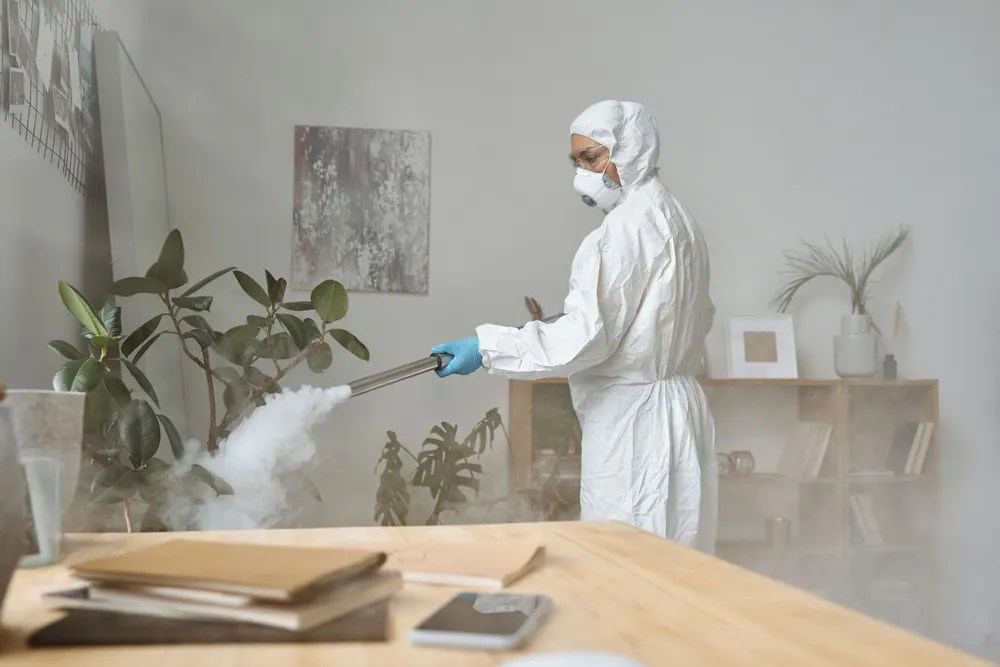
Pest control in Bromhof is largely about complex living and newer homes: harvester termites in common-property lawns, mice coming in from open ground, ants before the rain, paper wasps under double-storey eaves and spiders in garages. We also do termite pre-treatments for new builds and additions. We work with homeowners and body corporates alike.
Bromhof in brief
Bromhof lies in northern Randburg, near Northriding and Randpark Ridge, and it's newer than central Randburg. Most of it is cluster complexes and townhouses, with freestanding family homes and some newer developments where land is still being built on. Many complexes have shared gardens, a clubhouse or pool and a body corporate managing the common property, and there are still patches of open ground in the wider area.
Newer homes have fewer of the problems of old suburbs. There's less old timber for borer and fewer giant trees for roof rats. But new suburbs bring their own pests: termites in lawns and in building rubble, mice from undeveloped land, and wasps that love the high eaves of double-storey units.
The main pests
Harvester termites on common property
Large shared lawns in complexes are prime harvester termite territory in dry winters. You'll see bare, sandy patches with small holes and little piles of cut grass. Because the lawn belongs to the complex, it's normally a body-corporate decision to treat. We treat the active openings so the workers carry the product to the colony, and we can survey the whole complex at once.
Mice
Units that back onto open ground or a vacant stand see mice in the garage and kitchen in autumn and winter. They get in under garage doors and around pipes. Traps, lockable stations and sealing the gaps work well. See mouse control across Johannesburg.
Ants
Ant nests under complex paving send trails into ground-floor kitchens before rain. Baits are the answer, and it's worth asking the body corporate to treat the common paving at the same time.
Wasps
Paper wasps build under the high eaves of double-storey units, in gutters and on balcony ceilings, where residents can't easily reach. We remove nests safely with the right equipment and treat the spot. Our wasp control in Randburg has more detail.
Spiders
Garages, storerooms and the gaps behind garden furniture shelter rain spiders and the occasional button spider. A perimeter treatment keeps them out of living areas. In complexes where every unit has a small walled garden, the spiders tend to collect in the same spots: behind the gas braai, under the outdoor table and in the corner where the garden hose is coiled.
Building or extending? Pre-treat the soil
Bromhof still has new developments and plenty of owners adding rooms, garages or patios. The best time to protect against subterranean termites is before the slab goes down: a termite pre-treatment of the soil creates a treated barrier under the foundations and floor. Banks and building inspectors often want proof it was done, and we provide the paperwork. For an extension, the new section needs its own treatment where it meets the soil. We time the treatment with your builder, after the foundations are dug and before the slab or screed is cast, so there's no delay on site. See termite pre-treatments in Johannesburg for how it works.
Working with body corporates
For complexes we offer a common-property programme: gatehouse, refuse area, clubhouse, common lawns and paving, serviced on a schedule with a written record for the trustees. Residents can then book their own units, often at the same time, so the whole complex is treated together. Inside units, our treatments are odourless and non-staining, and residents carry on as normal, keeping pets and children off treated surfaces until they've dried.
What often goes wrong
Builders leaving rubble, offcuts and timber formwork buried in the garden of a new home. It's cheap fill at the time, but it feeds termite colonies for years, and when it's used up, the house is next. If you're building, ask for the site to be cleared properly before landscaping.
A Bromhof tip
Fit a brush strip along the bottom of your garage door. In complexes backing onto open ground, the gap under the garage door is the number one way mice get in, and a brush strip is a quick DIY fix.
What it costs and why
For a single unit, the price depends on the pest and the size of the unit. Wasp nests on high eaves cost a little more because of access. Harvester termite treatments on common property are quoted on the lawn area. Termite pre-treatments are priced on the slab area being treated. Whole-complex programmes are quoted per site. You'll find guide "from" prices on our prices for pest control in Johannesburg page.
Bromhof is covered by our Randburg pest control team, and we also treat homes in nearby Northriding.
Combat Pest Control is owned by Jason van Heerden and has 25 years of experience. We're SAPCA registered and registered with the Department of Agriculture under Act 36, we offer service within 24 hours, and general treatments carry a 3-month guarantee, with a 5-year guarantee and certificate on termite work. Call 084 200 2700, or WhatsApp us a photo.
Questions we get asked
How much does it cost to treat harvester termites in our complex lawns?
It's quoted on the lawn area and the number of active openings. A whole-complex survey is usually the most cost-effective approach. Guide prices are on our price page.
Who pays for pest control in a complex?
The body corporate usually pays for common property, and owners or tenants pay for inside their units. We can quote both together.
Do I need termite pre-treatment for an extension?
Yes, it's strongly recommended. The new section's soil isn't covered by the original treatment, and termites can use it as a bridge into the house.
Can you remove a wasp nest from a double-storey eave?
Yes. We have the equipment to reach high eaves and remove the nest safely, then treat the spot so they don't rebuild.
How do mice get into my unit?
Usually under the garage door or through gaps around pipes. A brush strip and sealing pipe gaps stops most of them.
Do residents need to leave during a complex treatment?
No. Our treatments let residents stay home. Keep pets and children off treated areas until they're dry.