
Carpet beetle control in Johannesburg means finding the source, not just the damaged rug. The larvae that eat wool, silk, fur and feathers often breed in an old bird nest in the roof, under heavy furniture or in a forgotten box of clothes. We locate the breeding site, then treat it and the damaged areas.
What carpet beetles look like
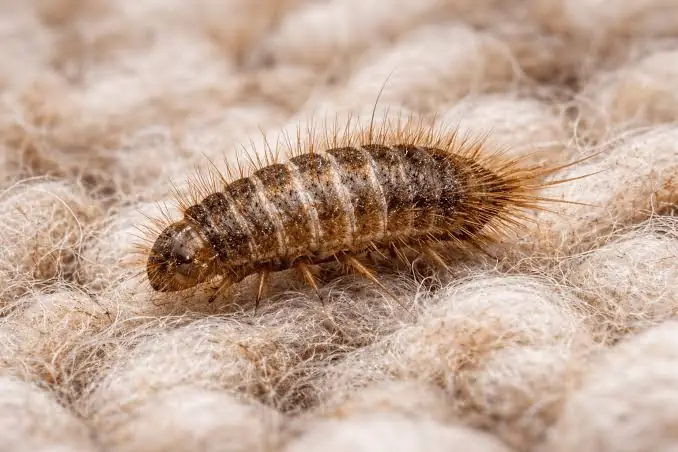
Adult carpet beetles are small, round beetles, two or three millimetres long, often mottled with white, brown and yellow scales. They're harmless in themselves: adults feed on pollen and nectar and are often seen on windowsills in spring, trying to get out to the flowers. The damage is done by their larvae. These are small, brown, bristly grubs, sometimes called woolly bears, that curl up when disturbed and leave behind shed skins that look like tiny hairy husks.
What the larvae eat
Carpet beetle larvae feed on keratin, the protein in animal fibres and hair. In a home that means wool carpets and rugs, woollen jerseys and suits, silk, fur collars, feather duvets and pillows, felt in pianos, leather, and stuffed animals and trophies. They also eat dead insects, pet hair, lint and the debris that collects under furniture, which is how a population gets going in an ordinary home. Damage shows as irregular holes, thin patches on rugs, and fibres chewed along the edges of carpets where the vacuum doesn't reach.
Where they come from
Most carpet beetle infestations start somewhere you don't look often. The most common sources we find in Johannesburg homes are:
- Bird nests in the roof: pigeons, sparrows and Indian mynas nesting under roof tiles leave feathers and debris that support carpet beetles, and larvae drop through ceiling gaps into the rooms below.
- Dead insects in the ceiling: after a wasp nest or a cluster of flies has died off in the roof space.
- Under heavy furniture and along carpet edges: places that don't get vacuumed for years.
- Wardrobes and storage boxes: wool and silk stored unwashed, especially winter clothes packed away for summer.
- Old rugs, trophies and heirlooms: sheepskins, skins and mounted heads.
If birds are nesting in the roof, our bird proofing in Johannesburg closes the gaps so the problem doesn't keep restarting.
Why Johannesburg sees them
Highveld homes pack away a lot of wool. Winter here is cold enough for heavy jerseys, blankets and rugs, and those are stored through the hot summer months, when carpet beetle larvae are most active. Older homes in the established suburbs, with fitted wool carpets, Persian rugs and roof spaces used by birds for decades, are particularly prone. Adults fly in through open windows in spring and early summer, lay eggs in a dark spot with something to eat, and the cycle starts again.
How we treat carpet beetles
- Find the source. We inspect damaged items, carpets, wardrobes, under furniture and, where needed, the roof space, looking for larvae, shed skins and nest material.
- Remove the food supply. Old bird nests, dead insects and heavily infested items are removed or isolated.
- Treat the affected areas. We apply odourless, non-staining residual treatments along carpet edges, under furniture, inside cupboards and wardrobes, and in the roof space if the source is there.
- Advise on your belongings. Infested clothes and textiles need washing hot, dry-cleaning or, for delicate items, sealing in bags and freezing for a couple of weeks.
- Follow-up if needed. Larvae can develop slowly, so heavier cases may need a second visit.
You don't need to leave home. Keep children and pets off treated carpets and out of treated cupboards until they're dry.
What people get wrong
Blaming clothes moths. Holes in woollens are often put down to moths, so people hang mothballs and the damage continues, because the real culprit is breeding in the roof or under the bed. The other common mistake is treating the damaged rug and ignoring the source. Unless the bird nest, dead insects or infested box is found, new larvae keep arriving.
Prevention tips
- Wash or dry-clean winter woollens before storing them, and pack them in sealed bags or plastic boxes.
- Vacuum under beds, couches and heavy furniture and along carpet edges regularly.
- Check the roof for nesting birds and old nests, and have gaps under the tiles sealed.
- Inspect second-hand rugs, furniture and fabrics before bringing them inside.
- Close or screen windows on warm spring days when adult beetles are flying.
What carpet beetle control costs, and why
The price depends on how many rooms are affected, whether the source is in the roof space, how much furniture and carpet has to be treated, and whether a follow-up is needed. A single wardrobe and bedroom is a small job; a large house with fitted wool carpets and a bird-filled roof takes considerably more. The starting price is on our list of guide prices. If you've found larvae in one box of jerseys, washing the clothes and vacuuming the cupboard thoroughly may be enough.
For a deeper look at the beetle itself, read our carpet beetle guide. Fabric and paper damage can also come from fish moths, which our fish moth treatments around Johannesburg deal with. And if you're unsure what's eating your belongings, our general pest control service starts with an inspection to find out.
Carpet beetles reward a patient, careful inspection, which is what 25 years of pest control work has taught us. Combat Pest Control is SAPCA registered and on the Department of Agriculture register, we offer service within 24 hours, and carpet beetle work carries a 3-month guarantee. Phone 084 200 2700, or WhatsApp a photo of the larvae or the holes in your woollens.
Questions we get asked
How much does carpet beetle treatment cost?
The cost follows the size of the problem: how many rooms are affected, whether the source is in the roof and how much carpet and furniture needs treating. A bedroom and wardrobe is a small job; a whole house costs more. We confirm the price after inspecting.
Is it moths or carpet beetles eating my clothes?
Look for small, hairy, brown larvae and their shed skins, which point to carpet beetles. Clothes moths leave silky webbing and small cases. A photo on WhatsApp helps us tell.
Do carpet beetles bite?
No. They don't bite, though some people get an itchy rash from contact with the larvae's bristles.
Why do I have carpet beetles if my house is clean?
They often breed in places you can't clean easily: old bird nests in the roof, dead insects in the ceiling, or under heavy furniture. Adults also fly in through open windows.
Can my rug be saved?
Usually, yes. Vacuum both sides thoroughly and have it professionally cleaned. Heavily damaged areas may need a rug repairer.
How long does the treatment last?
Carpet beetle treatments carry a 3-month guarantee. Removing the source, storing woollens properly and vacuuming under furniture keeps them from returning.
What should I do before you arrive?
Bag infested clothes and textiles, clear the floor under beds and furniture, and give us access to wardrobes and the roof hatch.