
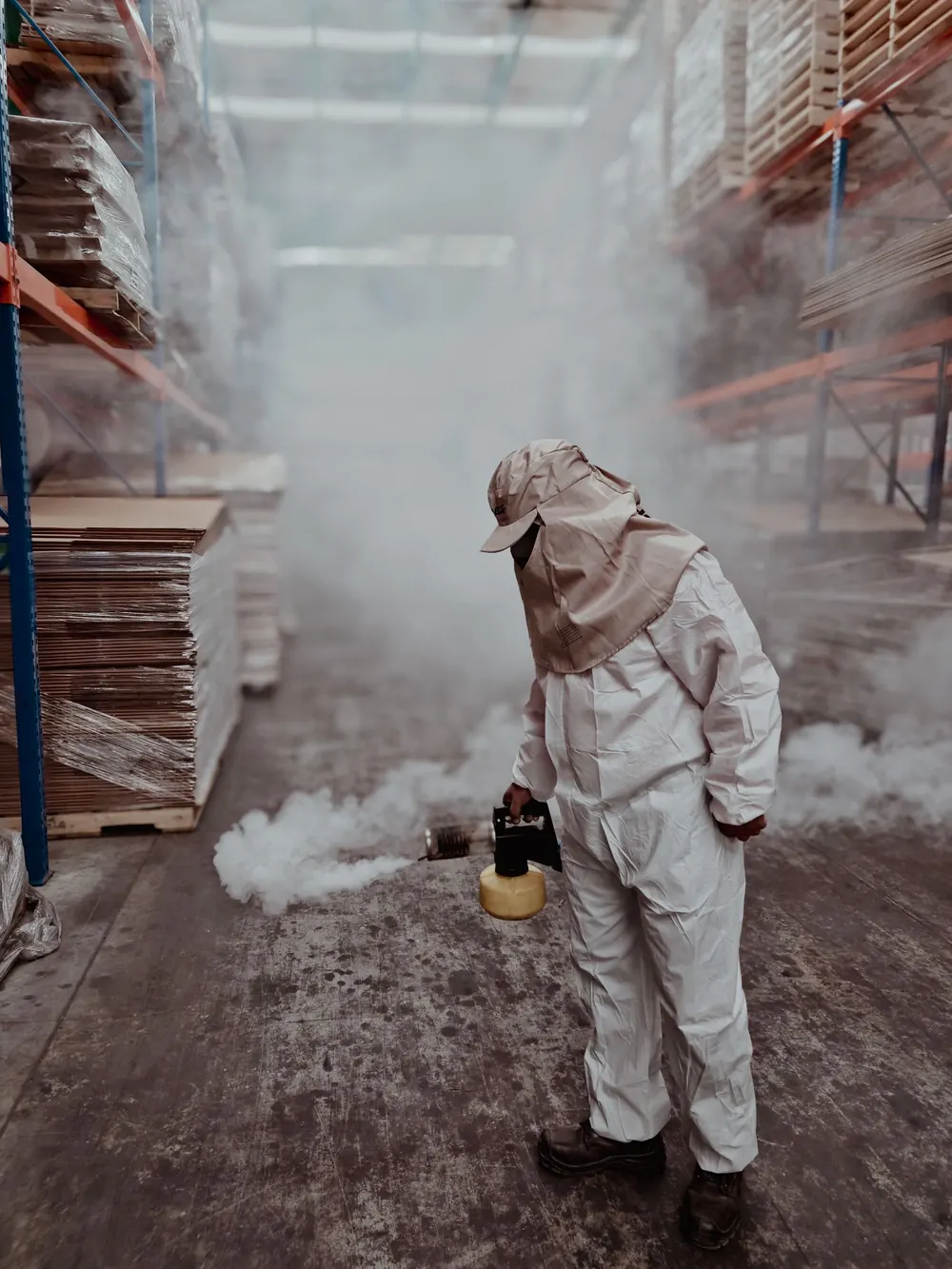
Fumigation in Johannesburg means treating a sealed space or load with a registered gas fumigant that reaches insects deep inside stored products, furniture and timber, where sprays can't. It suits stored-product pests, wood borer in movable items and severe infestations. The sealed area must stay empty until it's cleared, so we only recommend it when it's genuinely needed.
Fumigation versus ordinary pest control
The word gets used loosely. People say they want the house "fumigated" for cockroaches, ants or fleas, but those are handled with gel baits, ant baits and residual sprays, and you don't need to leave home for them. True fumigation uses a gas that fills every gap in a sealed space and penetrates bags, boxes and timber. It's very effective for the right job, but it involves sealing, a period when nobody can enter, and clearance before people return. For most household pests it is the wrong tool, and suggesting it for a few cockroaches would be selling you something you don't need.
When fumigation is the right answer
- Stored-product insects in warehouses, mills, food factories and storerooms: grain weevils, flour beetles, pantry moths and similar pests living inside bags, sacks and packed goods.
- Wood borer in furniture, antiques and wooden items that can't be treated in place with a liquid, or where the infestation runs through the whole piece.
- Infested goods that have to be cleaned up before they move, such as stock in a storeroom, or a container of goods where insects have been found.
- Severe infestations in an enclosed area where other methods have failed or can't reach.
For timber in a building, such as roof trusses and floors, a liquid wood borer treatment is normally the better route; our wood borer treatment in Johannesburg page explains that side.
How a fumigation job works
- Inspection and identification. We confirm the pest and that fumigation is the best method for it. Many enquiries end here, with a simpler treatment.
- Planning. We agree the area or items to be treated, the sealing method, the exposure time and when people and staff can safely return.
- Sealing. The space, stack or items are sealed with gas-tight sheeting or by closing up the room, and warning notices go up.
- Treatment. A registered fumigant is released and held for the required exposure time.
- Ventilation and clearance. The area is aired out and checked before anyone is allowed back in.
Safety, honestly
Fumigants are dangerous to people and animals, which is why they're only handled by registered operators and why the sealed area must be completely empty, including pets, until it has been cleared. Neighbours and staff in adjoining areas need to be told, and in some buildings the treatment has to be done over a weekend or a shutdown. Food in the treated area may need to be removed or covered depending on the product, and we'll give you a written list of what to do before and after.
Food businesses and warehouses
Johannesburg has logistics parks, mills, bakeries and food factories in Midrand, the south and the city's other industrial nodes. For these sites, stored-product insects arriving in raw materials are an ongoing risk. Fumigation of an infested stack or storeroom deals with the immediate problem, but it doesn't stop the next delivery bringing more, so we usually combine it with stock inspections, good rotation, cleaning of spillage and a monitoring contract. A written pest report after each visit supports your audits.
The mistake people make
Buying a bug bomb or smoke fogger and calling it fumigation. These release an aerosol, not a fumigant gas, and they don't reach into bags, cracks or timber. They often scatter cockroaches deeper into walls and leave residue on every surface in the room. If you've used one already, tell us before we plan anything.
A practical tip
Before calling for fumigation of a pantry or storeroom, take everything out and look. Most stored-product insect problems in homes come from one or two old packets of flour, birdseed, dog biscuits or dried beans at the back of a shelf. Throw those out, vacuum the shelves and store the rest in sealed containers. Very often, nothing more is needed.
What it costs and why
Fumigation is priced on the volume being treated, the fumigant and exposure time needed, how much sealing work is involved and whether it has to happen after hours. A single item of furniture is a small job; a warehouse stack or a whole storeroom is quoted individually. Because it's specialised, fumigation costs more than a normal insect treatment, which is another reason we only suggest it when it's needed. Our pest control price page lists starting prices for our services, and we'll give you a written quote after inspecting.
Related services
If you need a pest report for a food business or property sale, see our entomological inspections. For cockroaches in kitchens, the right approach is usually targeted cockroach treatment rather than gas. The fumigation guide covers how fumigants work and when they're used.
Combat Pest Control is SAPCA registered and registered with the Department of Agriculture under Act 36 of 1947, and owner Jason van Heerden brings 25 years of experience to every job. We aim for service within 24 hours, and general treatments carry a 3-month guarantee. Call 084 200 2700 to talk through whether fumigation is right for your problem, or WhatsApp us a photo.
Questions we get asked
How much does fumigation cost?
It depends on the volume being treated, the exposure time and the sealing work. One piece of furniture is a small job; a warehouse stack is quoted on its size. Fumigation costs more than a normal treatment, and we only recommend it when it's needed.
Do I need to fumigate my house for cockroaches?
Almost never. Cockroaches are controlled far better with gel baits and targeted treatment, and you can stay at home while we do it.
How long do we need to stay out after fumigation?
Until the area has been ventilated and cleared, which depends on the fumigant and the space. We'll give you a time before we start and tell you when it's safe.
Is fumigation safe for pets?
Only if they're completely out of the sealed area until it's cleared. Pets, plants and people must not be inside during treatment.
Can you fumigate antique furniture for wood borer?
Yes. Fumigation suits furniture where the infestation runs through the piece or where liquid treatment could damage the finish.
Will fumigation stop the insects coming back?
It kills the insects present at the time but leaves no lasting protection. Preventing re-infestation needs clean storage, good stock rotation and, for businesses, regular monitoring.
What do I need to do before fumigation?
We give you a written checklist: usually removing or sealing food, removing pets and plants, opening internal doors and cupboards, and informing neighbours or staff.