
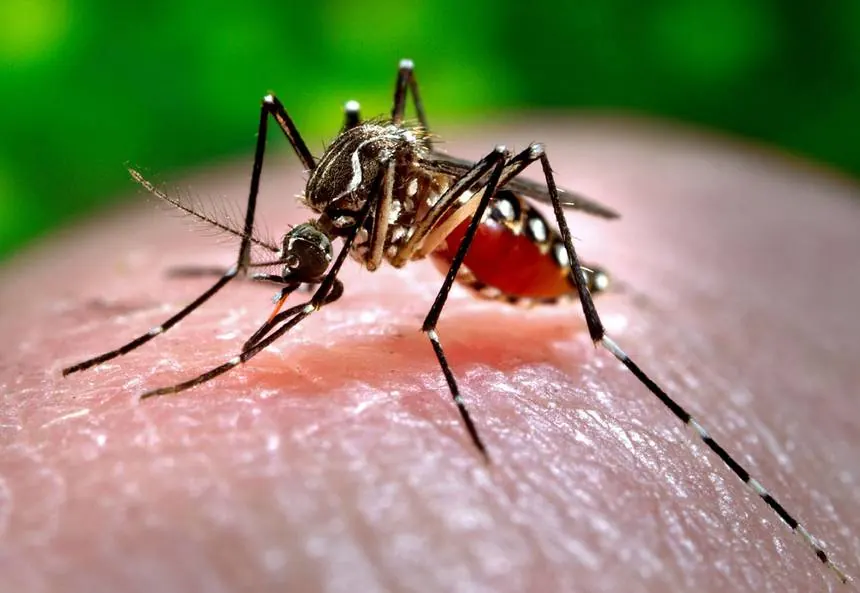
Mosquito control in Johannesburg works when you stop the breeding as well as the biting. We find the standing water where larvae develop, help you remove it, and treat the shady places where adult mosquitoes rest during the day, such as dense shrubs, under eaves and covered patios. Done together, the night-time biting drops noticeably.
Why mosquitoes peak in a Johannesburg summer
Mosquitoes need standing water to breed, and the Highveld's summer storms deliver it almost every afternoon from October to March. Gutters overflow, pot saucers fill, tyres and buckets collect water, pool covers sag into puddles, and ornamental ponds and water features warm up. In that heat, eggs laid on still water can become biting adults in roughly a week. Dry, cold winters knock numbers right down, which is why mosquitoes in Johannesburg are very much a summer problem. Properties near dams, wetlands, the Klip River and the city's spruits often see more, but most bites still come from water in the garden itself.
Johannesburg is generally not a malaria area, so for most households mosquitoes are about itchy bites and broken sleep rather than serious illness. If you have travelled to a malaria area recently and feel unwell, see a doctor.
Where we find mosquito breeding
- Gutters with leaves and debris that hold water after every storm
- Saucers under pot plants, birdbaths, and dog water bowls left outside
- Sagging pool covers, neglected pools in empty houses and green water features
- Old tyres, buckets, wheelbarrows and children's toys left in the garden
- Blocked stormwater drains, rainwater tanks without fitted lids and septic covers
- Bromeliads and other plants that hold water where leaves meet the stem
Signs the mosquitoes are breeding close by
Mosquitoes don't usually travel far from where they hatch, so heavy biting is a good sign that the water is on your property or next door. Clues to look for:
- Bites mostly at dusk and through the night, around ankles and arms
- Mosquitoes resting on walls and ceilings in the morning, especially in bathrooms and bedrooms
- Small wriggling larvae, sometimes called wigglers, in any bucket or saucer of water left outside
- Clouds of insects in a shady corner of the garden when you brush past a hedge
- The problem getting worse each time it rains and easing off in dry spells
If the garden is clean and you're still being bitten, the source may be a neighbour's empty pool or a blocked stormwater drain in the street, and we'll point it out so it can be reported or dealt with.
How we treat
- Survey the property. We walk the garden and the outside of the building looking for any container or surface holding still water, and we show you what we find.
- Remove or manage the water. Most sources can simply be tipped out, cleared or covered. Larger water features and ponds need a plan, such as keeping water moving or fitting covers on tanks.
- Treat resting areas. Adult mosquitoes spend the day in cool, shaded spots out of the wind: thick hedges, the underside of eaves, covered patios, garages and the space under decks. We apply a barrier treatment to those surfaces so mosquitoes landing there die.
- Repeat in peak season. On estates, wedding venues, schools and hospitality sites, scheduled treatments through summer keep the numbers down.
The thing people get wrong
Fogging the garden on the evening of a braai and hoping for the best. It kills the mosquitoes flying at that moment, but the next batch is already wriggling in a pot saucer or the gutter and will be out in a few days. Plug-in devices and coils indoors help you sleep but don't change how many are breeding outside. The bites only really drop when the water does.
Estates, venues and businesses
Security estates and golf estates with dams, water features and large common gardens have far more breeding sites than any single home, and one resident tidying their own yard makes little difference if the common areas aren't done. We work with estate managers on the common property and give residents a short checklist for their own gardens. Restaurants with outdoor seating, guest houses and event venues benefit from treatment before the busy summer weekends.
A Highveld tip
After every big afternoon storm, take two minutes to walk the garden and tip out anything holding water: saucers, buckets, toys, the wheelbarrow. Clean the gutters properly in September before the rains start. It's the cheapest mosquito control there is.
What it costs and why
For an ordinary home, a survey and barrier treatment of the resting areas is a modest job, and sometimes the honest answer is that clearing the water yourself is enough. Costs rise with the size of the garden, the amount of dense planting to treat, the number of water features, and whether you want repeat treatments through the season. Estates and venues are quoted on the area involved. Our pest control prices page lists the starting price.
Related services
Mosquitoes are one of several pests covered under biting insect control, alongside fleas and bed bugs, and they share a treatment approach with flies and wasps under our flying insect service. Homes near Emmarentia Dam and the Northcliff ridge are covered by pest control in Northcliff, and properties close to the Klip River and Klipriviersberg by our Johannesburg South team.
Combat Pest Control is owned and run by Jason van Heerden, SAPCA registered and registered with the Department of Agriculture, with 25 years in pest control. Service is within 24 hours, and the 3-month guarantee on treatments applies. Call 084 200 2700 to book a garden survey, or WhatsApp us a photo of the water feature you're worried about.
Questions we get asked
How much does mosquito control cost?
For a normal home it's a modest job: a survey of breeding sites and a barrier treatment of resting areas. Large gardens, estates and venues cost more because there's more to treat. See the price guide for the starting price.
How long does a mosquito treatment last?
A barrier treatment on resting surfaces keeps working for several weeks, but heavy rain and new breeding water shorten that. In peak summer, many estates and venues book repeat treatments.
Is it safe for my pets, fish and children?
Yes, applied correctly. We treat resting surfaces, not the water in ponds or pools, and you keep children and pets off treated plants and surfaces until they're dry. Tell us about any fish ponds so we can work around them.
Do I have to stay indoors during treatment?
Only while we're treating your part of the garden. Once surfaces are dry you can use the garden as normal.
Can you treat my pond instead of draining it?
We don't treat fish ponds with insecticide. A pond with moving water and healthy fish rarely breeds many mosquitoes; a stagnant one needs a pump, fish or regular cleaning.
Why do I get bitten indoors at night?
Mosquitoes come in through open windows and doors at dusk and rest on walls and curtains. Screens and closing up at dusk help, but cutting breeding outside is what reduces the numbers.
Is there malaria in Johannesburg?
Johannesburg is generally not a malaria area. Local mosquitoes are a nuisance biter. If you've recently travelled to a malaria area and feel ill, see a doctor.