
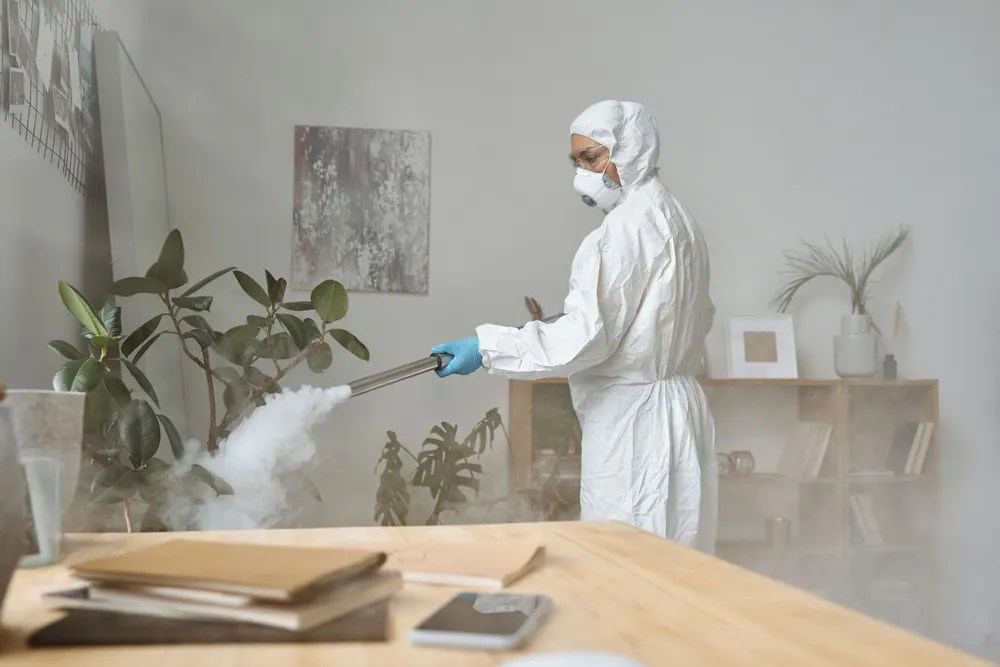
Pest control in Holfontein mostly involves properties with open ground around them: rats and mice in outbuildings and roofs, moles tunnelling through lawns, harvester termites in dry grass, ticks and fleas on dogs, flies around animals and wasps under the eaves. Combat Pest Control serves Holfontein from Johannesburg, inspecting the whole property before deciding how to treat it.
The East Rand setting
Holfontein lies on the East Rand, in the part of Ekurhuleni where built-up suburbs thin out into veld, old mine land, pans and farmland. The eastern Highveld here is flat and open, with grassland, seasonal wetlands and plenty of space between properties. Winters are cold and dry, often with frost; summers bring heavy afternoon storms.
That landscape shapes the pest list. Grassland means harvester termites and moles. Open veld and pans mean rodents and mosquitoes nearby. Animals, feed and outbuildings mean flies and rats. And where there's space, there's usually a garage, a workshop or a storeroom full of things that rodents love to nest in.
What we find on Holfontein properties
Rats and mice
Rodents living in the veld move towards buildings in autumn, when grass dries and food gets scarce. Feed rooms, chicken runs, garages and roof spaces are the usual targets. We use lockable, tamper-resistant bait stations outside and along fence lines, traps inside where bait isn't suitable, and a proofing check of doors, vents and pipe entries. Our rodent control page has more on how we set this up for larger properties.
Moles
Molehills and raised tunnels across the lawn are a common sight on the East Rand, especially after rain when the soil is soft. In Gauteng the culprit is usually a golden mole or a mole-rat rather than a true mole. They damage lawns, garden beds and irrigation, and they're tricky to deal with yourself. See our mole control page for how we handle them.
Harvester termites
Bare, sandy patches dotted with small holes and cut pieces of grass in winter are the sign. In open grassland country, harvester termites can strip a lawn or a paddock quickly. A targeted treatment of active holes while the termites are foraging stops them.
Ticks, fleas and flies
Dogs and livestock on plots pick up ticks in long grass, and fleas breed in kennels, under stoeps and in pet beds. We treat resting areas and the house together. Flies breed in manure, wet feed and bins, so dealing with those spots matters as much as any treatment.
Wasps and bees
Paper wasps nest under eaves, in sheds and carports. Bee swarms settle in walls, roof spaces and meter boxes in spring. Wasp nests are treated and removed; bee swarms are rehomed with a beekeeper where possible.
How we work on bigger stands
A big property needs a longer inspection. We check the house, the roof space, outbuildings, feed rooms and animal pens, the garden and the boundary with open veld. Then we set out a plan covering what we'll treat, where bait stations will go, and what you can change to keep pests out. Rodent stations on plots work best on a regular check schedule, especially through autumn and winter.
Normal treatments don't require anyone to move out. Keep children, pets and livestock away from treated areas until they've dried.
Mosquitoes and the pans
The East Rand's pans and seasonal wetlands fill up in summer, and so do the dams, troughs and old tyres on plots. Any of them can breed mosquitoes. Most of the fix is simple: empty or turn over anything that holds water, keep troughs topped with fresh water and cleaned, and cover water tanks properly. For the rest, we treat the shady places where adult mosquitoes rest during the day, such as under eaves, in outbuildings and in thick shrubs near the house.
A mistake that's easy to make
Flooding mole tunnels with a hosepipe, or pouring diesel or poison down them. Water just makes the soil softer and easier to dig, and fuel and poison contaminate the soil and groundwater while rarely reaching the animal. There are better ways.
A Holfontein tip
Keep a mown strip of short grass around the house, the outbuildings and the feed room. Rodents dislike crossing open ground, and a cut strip means less cover right up to your walls.
What it costs and why
For a house on a normal stand, the cost depends on the pest and the size of the home. On a plot or smallholding, it depends on the number of buildings, the bait stations needed and how often they're checked. Moles and harvester termites depend on the area of lawn affected. Travel is part of the cost on outlying properties. You'll find guide "from" prices on our pest control prices page, and we quote after walking the property. For one or two mice in the garage, a few snap traps may be all you need.
We work across the East Rand, including Benoni, and our Johannesburg pest control page lists all our services.
Jason van Heerden owns and operates Combat Pest Control and has 25 years of hands-on experience. We're registered with SAPCA and with the Department of Agriculture under Act 36, and we offer service within 24 hours and a 3-month guarantee on general treatments. Call 084 200 2700, or WhatsApp us a photo of the molehills, droppings or nest.
Questions we get asked
How much does pest control cost on a Holfontein plot?
The number of buildings, how many bait stations are needed and how often we visit decide the price. Starting prices are listed on our price page, and you get a firm figure after we walk the property.
Are the molehills in my lawn from moles?
Usually they're from golden moles or mole-rats, which are common in Gauteng. We identify which before treating.
Is rodent bait safe around chickens?
Yes, when it's in lockable stations placed where chickens can't reach them. We never scatter loose bait.
Why are rats moving into my outbuildings now?
In autumn, as the veld dries and food gets scarce, rodents move towards buildings. Bait stations set up before winter help.
Can you deal with harvester termites in a paddock?
Yes. We treat active holes while the termites are foraging, which is the most effective time.
Do you remove bee swarms?
Where possible we rehome swarms with a beekeeper, and remove comb if they've moved into a wall or roof.