
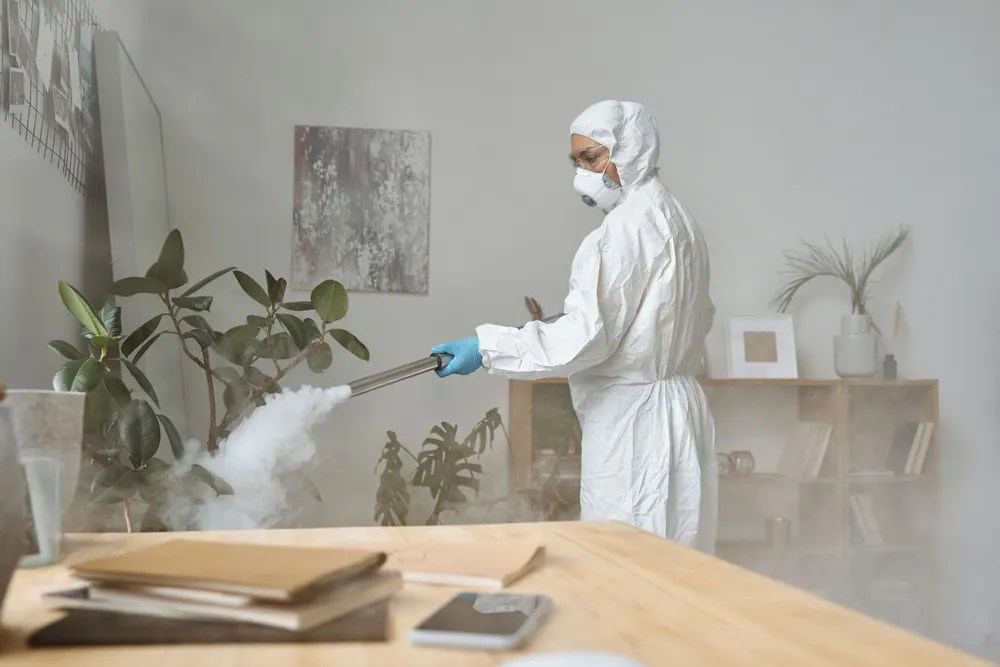
Pest control in Walkerville is mostly smallholding work: rats and mice in feed rooms and outbuildings, flies around animals, ticks on dogs and horses, harvester termites in dry grazing and scorpions under rocks and wood piles. Combat Pest Control serves Walkerville from Johannesburg and treats each plot as the working property it is.
Plot life south of Johannesburg
Walkerville is a stretch of agricultural holdings in the Midvaal, south of Johannesburg and towards Meyerton and the Vaal. Most stands are a few hectares, with a house, a cottage or two, sheds, a borehole, and often horses, chickens, goats or a vegetable tunnel. Some are small businesses: kennels, nurseries, workshops. Between the plots there is open veld and grassland.
That mix changes how pests behave. There is food everywhere: animal feed, eggs, fallen fruit, compost and manure. There is cover everywhere too: stacked bales, old timber, rock piles and unused buildings. And there are no neighbours a few metres away whose treatment helps yours. On a plot, you deal with the whole property or the problem simply moves to the next shed.
The pests that matter on Walkerville plots
Rats and mice in outbuildings
Feed rooms, tack rooms, chicken runs and garages are where rodents start. Both brown rats and house mice chew through feed bags, foul grain with droppings and urine, gnaw wiring in sheds and vehicles, and move into the house when winter sets in. We set out lockable bait stations along walls and fences, away from animals, and use traps where bait is not suitable. Our rodent control in Johannesburg page explains the approach in more depth.
Flies around animals
Stables, kennels and chicken runs produce flies all summer. House flies and stable flies breed in wet manure and old bedding, and they bother animals as much as people. Treatment helps, but the bigger win is removing manure often and keeping bedding dry, because a fly can go from egg to adult in about a week in summer heat.
Ticks and fleas
Long grass, livestock and dogs that roam the plot make ticks a real problem, and some of them carry tick bite fever. We treat kennels, sleeping areas and the grass around the house, and owners need to treat their dogs with a vet-recommended product at the same time.
Harvester termites and subterranean termites
In a dry winter, harvester termites strip grazing and lawns, leaving bare patches with small holes and loose soil heaps. Subterranean termites are a separate risk to old farmhouses, timber outbuildings, fence posts and stacked wood. See our termite control across Johannesburg page for how each one is treated.
Scorpions and spiders
Rock piles, wood stacks and loose bricks hide scorpions, especially on warm summer nights. Thick-tailed scorpions with small pincers are the ones to treat with respect. We treat the house perimeter and outbuildings, and the best long-term fix is to move rubble and wood away from the house.
How we treat a smallholding
The visit starts with a walk around the whole plot, because the house is rarely where the problem begins. We look at the feed store, animal housing, sheds, compost, the borehole and pump room, and any old buildings. Then we agree a plan that keeps bait and sprays away from animals, water troughs and vegetable beds. Most insect treatments let you stay home, but animals and children need to stay off treated surfaces until they are dry.
What plot owners often get wrong
Many people put rat poison loose in the feed room. Chickens, dogs and wild owls end up eating poisoned bait or poisoned rats, and the rats keep coming because the feed is still open. Store feed in metal bins with tight lids first, then bait in stations. Owls and kestrels hunting over the veld are useful allies, and loose poison kills them too.
A Walkerville tip
Raise stacked bales, timber and feed bags off the ground on pallets and keep them a hand-width from the walls. It takes away the dark gap rats and scorpions rely on and makes it easy to see fresh droppings.
What it costs and why
Plots are priced on what is being treated, how many buildings are involved and how far the problem has spread. A house treatment is quick. Rodent control across stables, feed rooms and sheds takes longer and usually needs follow-up visits. Termite work depends on which termite it is and the size of the area. Our guide prices for pest control show where each service starts, and we quote clearly after the inspection.
We also look after plots and homes around Meyerton, and the full list of what we treat is on our pest control in Johannesburg page.
Combat Pest Control is run by its owner, Jason van Heerden, who brings 25 years of experience to every job. We are registered with SAPCA and with the Department of Agriculture under Act 36, offer service within 24 hours, and our general treatments carry a 3-month guarantee. To book a visit to your plot, call 084 200 2700 or WhatsApp us a photo.
Questions we get asked
How much does pest control on a plot cost?
It depends on how many buildings we treat and which pests are involved. A house treatment is modest, while rodent work across stables and sheds costs more. Our price page shows guide prices and we confirm a quote after inspecting.
Is rat bait safe around horses, dogs and chickens?
It is when it is inside lockable stations placed away from animals. We never scatter loose bait on a working plot.
Can you treat flies in stables?
Yes. We treat resting areas in and around the stables, but removing manure and wet bedding regularly matters just as much.
Why are there bare patches in my paddock?
In a dry winter it is often harvester termites. Look for small holes with loose soil and cut grass pieces around them, then call us to confirm and treat.
Do you treat ticks in the garden?
Yes. We treat the grass, kennels and dog sleeping areas around the house, and your dogs should be treated by a vet at the same time.
Can my borehole water be affected?
No, used correctly. We keep treatments away from the borehole, the pump room and water troughs.
What should I do before you arrive?
Lock away animals that roam the plot, move feed bags away from walls if you can, and note where you have seen droppings or activity.