
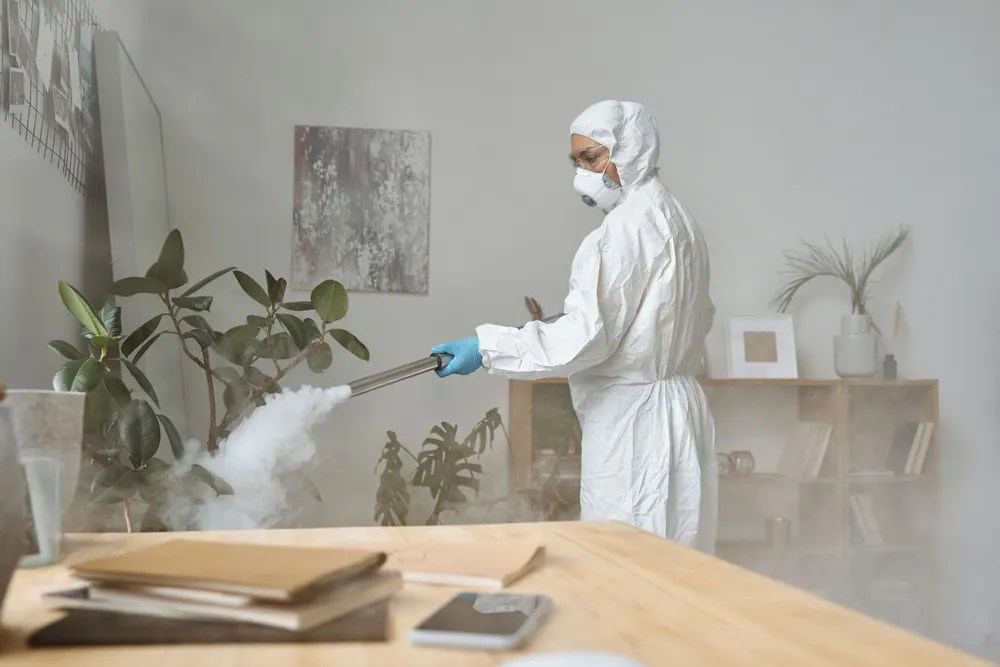
Pest control in Greenspark is mainly residential: rats and mice in roofs and garages, cockroaches in kitchens, ants before the summer rain, termites in lawns and timber, and fleas wherever there are pets. Combat Pest Control serves Greenspark from Johannesburg, inspecting the whole property before treating, because the room where you see the pest is rarely where it starts.
A Highveld home, room by room
Greenspark homes deal with the same Gauteng climate as the rest of the province: hot, stormy summers that bring insects out in force, and dry, cold winters that push rodents indoors. Rather than list pests in the abstract, here is where we actually find them on a typical inspection, starting from the top.
The roof space
Scratching above the ceiling at night usually means roof rats or mice. They get in at the eaves, where fascia boards have shrunk or been damaged, through gaps where roof sheets overlap, and along branches that touch the roof. Pigeons and mynas nesting in the eaves can also leave bird mites behind, which bite people in the rooms below once the birds leave. Our rat treatments page explains why we bait outside and trap inside.
The kitchen
German cockroaches are the main problem: small, light brown and fast, hiding in fridge motors, under the stove, inside cupboard hinges and behind the dishwasher. Their droppings look like ground pepper. Ants arrive here too, following trails along skirting boards and window frames to sugar, pet food and crumbs.
Bedrooms and lounge
Fleas, if you have dogs or cats, especially on carpets and rugs and in pet beds. Bed bugs, which arrive with luggage or second-hand furniture and hide in mattress seams and bed frames. And spiders in corners and behind furniture, most of them harmless, though some people want them gone all the same.
Bathrooms and cupboards
Fish moths, in damp cupboards and among stored paper and linen. Drain cockroaches that come up through the floor trap at night.
Garage and outbuildings
Mice, which come in under the garage door. Rats nesting among stored boxes. Termites in cardboard and timber stored on the floor. Wasps building nests under the eaves.
The garden
Harvester termites cutting the lawn in winter, leaving bare patches and small holes. Ant nests under paving. Fleas and ticks in shady spots where dogs lie up. If you see mud tubes running up the outside wall, that's subterranean termites, and our termite control page explains what happens next.
How we treat a Greenspark home
- Inspection. We follow the same route as above, roof to garden, looking for activity, entry points, food and moisture.
- Plan. We explain what we've found and what we recommend, including anything you can fix yourself.
- Treatment. Lockable bait stations and traps for rodents, gel baits for cockroaches, ant baits taken back to the nest, odourless residual sprays for crawling insects, and targeted treatments for termites, fleas and bed bugs.
- Follow-up. Heavier problems, like bed bugs or a big cockroach infestation, get a return visit.
You don't have to leave the house. Keep children and pets off treated surfaces until they're dry, and rodent bait is always locked inside a station.
Seasons to plan around
Most Greenspark calls follow the weather. From September, as the first storms build, ants and flying termites appear and cockroaches become more visible. Mid-summer brings flies, mosquitoes around any standing water, wasps building under the eaves and the odd scorpion under a door. From April and May, when the nights get cold, rats and mice head for roofs, garages and wall cavities, and harvester termites start working on dry lawns. If you know a particular pest troubles you every year, the cheapest time to deal with it is just before its season starts.
What homeowners often get wrong
Treating only the room where the pest shows up. A kitchen sprayed for ants without dealing with the nest under the patio, or a flea-bombed lounge while the dog's bed in the garage goes untreated, will have the same problem a few weeks later. The source has to be found and treated.
A tip for Greenspark homes
Once a year, before winter, walk around the outside of your house and look at it the way a mouse would. Check the bottom of the garage door, the gaps around pipes going into walls, broken air bricks and the eaves. A few seals and some mesh do more to keep rodents out than any amount of bait.
What it costs and why
Price depends on the pest, the size of the house and how established the problem is. A kitchen cockroach treatment is a modest job. Bed bugs and fleas often need a follow-up, and termites depend on whether it's lawn activity or a structural problem. Combining treatments in one visit usually saves on the total. Guide "from" prices are on our pest control price guide, and we confirm the cost once we've seen the house. For a few ants or a single mouse, shop products can work, and we'll be honest about that.
For everything we do across Gauteng, see our main pest control page.
Combat Pest Control is run by its owner, Jason van Heerden, who has 25 years of experience. We're registered with SAPCA and with the Department of Agriculture, and we offer service within 24 hours and a 3-month guarantee on general treatments. Call 084 200 2700, or WhatsApp us a photo and we'll identify it for you.
Questions we get asked
How much does pest control cost for a house in Greenspark?
It depends on the pest, the size of the house and how bad it is. Our price guide shows starting prices, and we confirm after the inspection.
How do I know if I have rats or mice in the roof?
Rats are heavier and louder, and their droppings are bigger, about the size of a raisin. Mouse droppings are like rice grains. We confirm during the inspection.
How long does a general pest treatment last?
Residual treatments typically keep working for a few months, and general treatments come with a 3-month guarantee.
Is it safe to treat with a baby in the house?
Yes, used correctly. Keep the baby out of treated rooms until surfaces are dry, and we'll tell you exactly where we've treated.
What should I do before you arrive?
Clear access to the roof hatch, the kitchen cupboards and the garage. For fleas, vacuum carpets beforehand; for bed bugs, strip the beds.
Why do ants come inside before it rains?
Ants move to drier, safer spots before a storm and go looking for food. Baiting the trail lets the workers take the bait back to the nest.