
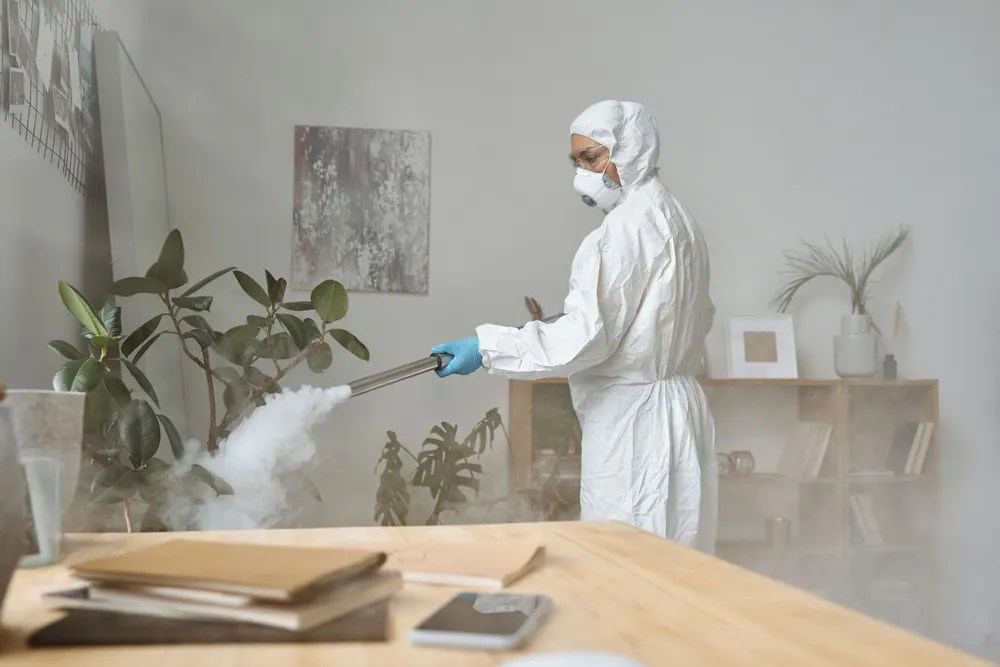
Pest control in Randvaal is mostly smallholding work: rats and mice in feed rooms and outbuildings, flies around animals, ticks in long grass and kennels, harvester termites in grazing and lawns, and wasp nests under the stoep. Combat Pest Control comes out to Randvaal from Johannesburg, walks the whole plot and treats the sources, not only the farmhouse.
Randvaal and how plot life shapes pests
Randvaal is an area of agricultural holdings in the Midvaal, south of Johannesburg and close to Meyerton, on the way down towards the Vaal. Stands are big. Most have a main house, a cottage or two, garages, storerooms and animal enclosures, and many keep horses, chickens, goats, dogs or a few cattle. Between the plots is open Highveld grassland, and the area has the river courses, dams and low-lying vleis typical of the Midvaal.
A smallholding offers pests three things a suburban house usually doesn't: animal feed, manure and a lot of undisturbed shelter. That's why plot owners see rodent and fly numbers that would shock a townhouse dweller, and why a single treatment of the house rarely solves anything.
A year of pests on a Randvaal plot
Late autumn and winter: rats, mice and harvester termites
When the cold sets in, rodents that spent summer in the veld move into feed rooms, tack rooms, garages and roofs. Signs are gnawed feed bags, droppings along walls and scratching in the ceiling. The dry season is also when harvester termites strip grazing and lawns, leaving bare patches with small open holes and loose soil heaps. A heavy harvester termite population can take a surprising amount of grass out of a paddock.
Spring: wasps and ticks
Paper wasps start building under eaves, in carports and on stable roofs as the weather warms. Ticks become active in long grass, kennels and around outbuildings, and dogs and livestock bring them close to the house.
Summer: flies, mosquitoes and ants
Heat and rain bring flies breeding in manure, wet bedding and spilled feed, and mosquitoes from standing water, troughs and low-lying ground. Ants march into the kitchen ahead of the storms.
How we treat a smallholding
We start by walking the plot with you: the house, cottages, storerooms, animal areas, compost and manure heaps, water points and the boundary with the veld. Then we put together a plan. For rodents that means lockable, tamper-resistant bait stations placed and fixed where livestock, dogs and children can't reach them, traps inside the house, and advice on rat-proofing the feed store. Our rodent control across Gauteng page has more on the station approach.
For flies, the real control is manure and bedding management, drainage and keeping feed spills down; we back that up by treating the walls and ceilings where flies rest, and the breeding sites. Our fly control service explains what works. Ticks are treated in kennels, runs and around buildings while you treat the animals with a vet product. Wasps are removed nest by nest, and bee swarms are referred to, or handled with, a beekeeper where possible. Harvester termites in grazing and lawns get a targeted treatment, and subterranean termites in buildings get a soil treatment backed by a 5-year guarantee with a certificate.
The mistake that costs plot owners most
Throwing loose rat poison into the feed room, the chicken run or behind the hay. It's the most dangerous way to bait: dogs, cats, poultry and owls take it, directly or by eating poisoned rats, and the rats keep breeding because the feed is still there. Locked stations and metal feed bins with tight lids do more good, and they keep the owls, which are excellent free rodent control, alive.
Inside the farmhouse
The house itself still needs attention. Mice follow the feed into kitchens and pantries, German cockroaches arrive in boxes and groceries and settle behind the stove, and fish moths do well in older, cooler farmhouses with linen cupboards and stored papers. These are treated with gel baits, targeted residual sprays and traps, and you don't need to leave the house while we work. A plot that keeps its outbuildings under control usually finds the house problems shrink on their own.
A Randvaal tip
Put up an owl box or two. Barn owls hunt rats and mice over open plots every night, and they need somewhere to nest. Combine that with sealed feed storage and stations around the buildings, and the rodent pressure on a plot drops a long way.
What it costs and why
A smallholding costs more to treat than a suburban house simply because there's more to treat: several buildings, animal areas and a long boundary. The main factors are the number of buildings, how many bait stations are needed, whether flies or ticks are part of the job, and whether termites are in a lawn, a paddock or a building. Many plot owners choose a scheduled service so the pressure never builds. This page shows a guide "from" price, and our price guide for pest control explains how the rest is worked out.
We also serve Meyerton and pest control in Vereeniging, and you'll find every service we offer on our Johannesburg pest control page.
Combat Pest Control is owned and operated by Jason van Heerden, with 25 years in the trade, SAPCA registration and registration with the Department of Agriculture under Act 36. We offer service within 24 hours and a 3-month guarantee on general treatments. Call 084 200 2700, or WhatsApp us a photo of what's in the feed room.
Questions we get asked
Do you come out to smallholdings in Randvaal?
Yes. We serve Randvaal and the surrounding Midvaal plots from Johannesburg, with service within 24 hours.
How much does pest control cost on a plot?
It depends on the number of buildings, how many stations are needed and which pests are involved. A plot costs more than a townhouse because there's more ground to cover. Our price guide gives a starting price and we quote after walking the property.
Is the rat bait safe around my horses, dogs and chickens?
It stays inside lockable, tamper-resistant stations that are fixed in place where animals can't get to them. We never use loose bait around livestock.
Can you do something about flies around the stables?
Yes, but the biggest difference comes from managing manure, wet bedding and feed spills. We treat resting and breeding sites and show you where the flies are coming from.
How often should a smallholding be serviced?
Plots with livestock and feed usually do best with regular scheduled visits, especially through winter for rodents and summer for flies. We'll suggest a frequency after the first visit.
Will you kill the owls if you bait for rats?
We use stations and place them carefully, which keeps the risk to owls much lower than loose bait. We'd rather you kept your owls; they help.
Do you remove bee swarms on plots?
Where possible we refer swarms to a beekeeper or work with one so the bees are relocated. Wasp nests we remove ourselves.