
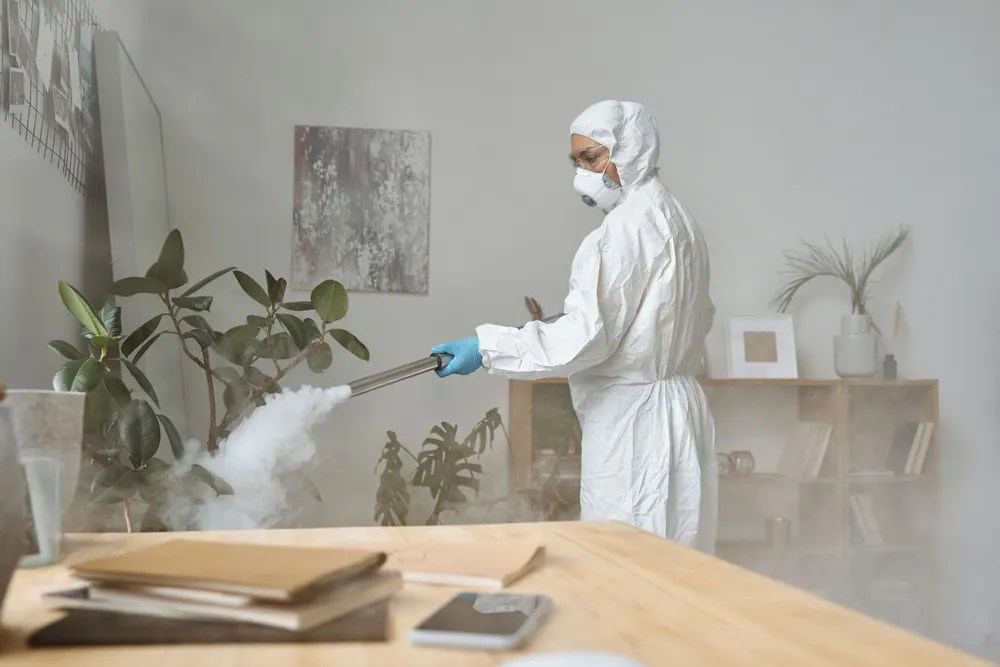
Pest control in Muldersdrift covers smallholdings, venues, guesthouses and homes, and the usual problems are rodents, flies, wasps, bee swarms, harvester termites and scorpions. Combat Pest Control serves Muldersdrift from Johannesburg. For venues and lodges we schedule work around bookings, so a treatment never clashes with a wedding or a conference.
Muldersdrift's mix
Muldersdrift is a semi-rural area on the West Rand, between Krugersdorp and the north-western edge of Johannesburg, close to the Cradle of Humankind. It is known for its wedding and conference venues, guest lodges, restaurants and nurseries, set among smallholdings where people keep horses, chickens and dogs. Newer estates and complexes have been added over the years, but much of the land is still open grassland, rocky ridges and veld.
That rural setting brings rural pests. Feed and grain attract rodents, animals and compost breed flies, open veld holds termites and scorpions, and large buildings with high roofs and thatch give wasps and bees space to settle. For a venue, the timing matters as much as the pest.
What we treat in Muldersdrift
Rodents
Rats and mice live around feed rooms, stables, kitchens and storerooms, and move into roof spaces in winter. At venues they are drawn to kitchens, refuse areas and storerooms full of linen and décor. We place numbered, lockable bait stations and keep a record of each one, which is exactly what a food business needs for its inspections.
Flies
Kitchens, outdoor dining areas, compost heaps and stables all breed flies, and nothing spoils an outdoor function faster. We treat breeding and resting sites and advise on waste handling and screening for kitchens.
Wasps and bees
Paper wasps build under eaves, pergolas, gazebos and thatch, and become defensive in late summer. We treat and remove nests. Bee swarms settle in roof cavities, wall voids and old trees, especially in spring; where possible we work with a beekeeper to have them removed rather than destroyed. Our bee swarm removal page explains how that works.
Harvester termites
Lawns and paddocks can go bare in winter as harvester termites cut and carry off grass, leaving small holes with loose soil around them. For a venue whose lawn is part of what guests pay for, that matters. We treat the active openings so the colony takes the treatment underground. Subterranean termites, which damage timber, are covered on our termite control across Gauteng page.
Scorpions and spiders
Rocky ground, stone walls and woodpiles shelter scorpions, which sometimes wander into rooms and cottages at night. A perimeter treatment, door brushes and clearing debris near buildings keep them out.
Working with venues and lodges
For venues, guesthouses and restaurants we usually recommend a scheduled monitoring contract. Visits are booked on quiet days, rodent stations are checked and logged, insect treatments are done as needed and a service report is left after each visit. If something comes up before a big booking, such as a wasp nest by the chapel door or a swarm in the roof, we offer service within 24 hours.
Homes and estates in Muldersdrift
Not every Muldersdrift call is about a venue. Family homes on plots and in the newer estates deal with the same pests as the rest of the West Rand, just more of them. Mice come in from the veld every autumn. Ants trail into kitchens before the storms. Ticks ride in on the dogs. Subterranean termites find wooden decks, pergolas and timber stored in garages, and new houses built on old grassland often have colonies close by. If you're building, a termite pre-treatment before the slab is cast is worth every cent. For an existing home, a yearly check of the roof space, the garage and the perimeter catches most problems while they're still small and inexpensive to fix.
What owners tend to get wrong
Leaving pest control until the week of an event. A wasp nest can be dealt with in one visit, but rodents in a kitchen or a fly problem around the stables take time to clear. Regular monitoring through the season costs less and avoids the panic.
A Muldersdrift tip
Walk around every building in early spring and look under eaves, pergolas and gazebo roofs. Small wasp nests the size of a coin are easy to remove; by late summer the same nests can hold dozens of wasps.
What it costs and why
A home on a plot is priced like any house, with extra for stables or outbuildings. Venues and lodges are usually on a contract priced on the size of the site, the number of buildings and how often we visit. A single wasp nest or a lawn termite treatment is a small job. Our pest control price guide shows "from" prices, and we quote after walking the property.
We also cover Krugersdorp and Kromdraai nearby, and the rest of our work is on the Johannesburg pest control page.
Combat Pest Control is owned and run by Jason van Heerden, with 25 years in pest control, SAPCA membership and registration with the Department of Agriculture. General treatments carry a 3-month guarantee. Call 084 200 2700, or WhatsApp us a photo of the nest, the swarm or the droppings.
Questions we get asked
How much does pest control cost for a Muldersdrift venue?
Venues are usually on a monitoring contract priced on the size of the site, the number of buildings and visit frequency. A one-off wasp nest or lawn treatment is much smaller. We quote after walking the property.
Can you treat without disturbing our guests?
Yes. We book visits on quiet days or outside function hours, and our treatments are odourless and non-staining.
There's a bee swarm in our roof. Will you kill it?
Where possible we work with a beekeeper to remove the bees alive. If that isn't possible, we deal with the swarm safely and advise on sealing the gap.
Do you provide records for health inspections?
Yes. Every station is numbered and logged, and you get a service report after each visit.
Why is our lawn going bare before the wedding season?
Often harvester termites in a dry winter. Look for small holes with loose soil and cut grass. Treating early gives the lawn time to recover.
Is the treatment safe around horses and dogs?
Yes, used correctly. Animals are kept away until treated areas are dry, and bait stays inside lockable stations.