
Rodent control in Johannesburg South is about more than one rat in a ceiling. With industrial yards, warehouses and food businesses alongside older homes, rats and mice move between properties freely. We set up lockable bait stations and traps, find and close entry points, and run monitoring programmes with written records for businesses that need them.
Why the south has a rodent pressure all of its own
The south of Johannesburg mixes housing and industry more than the northern suburbs do. Light industry, workshops, warehouses and depots sit in areas like Selby, Booysens, Ophirton and City Deep, often a short distance from rows of older houses. Rodents don't stop at the fence. A warehouse with pallets of packaged food, a workshop yard with stacked materials or a takeaway with overflowing bins gives rats and mice a base, and nearby homes give them warmth when the weather turns.
The Klip River, the veld and the old mine land add another layer. Brown rats burrow into banks, rubble and the edges of vacant land, and in dry or cold spells they move toward buildings for food and shelter. That's why a single treatment rarely solves a site in the south for long: the population next door is still there. What works is a programme that keeps them out.
Rats, mice and how to tell them apart
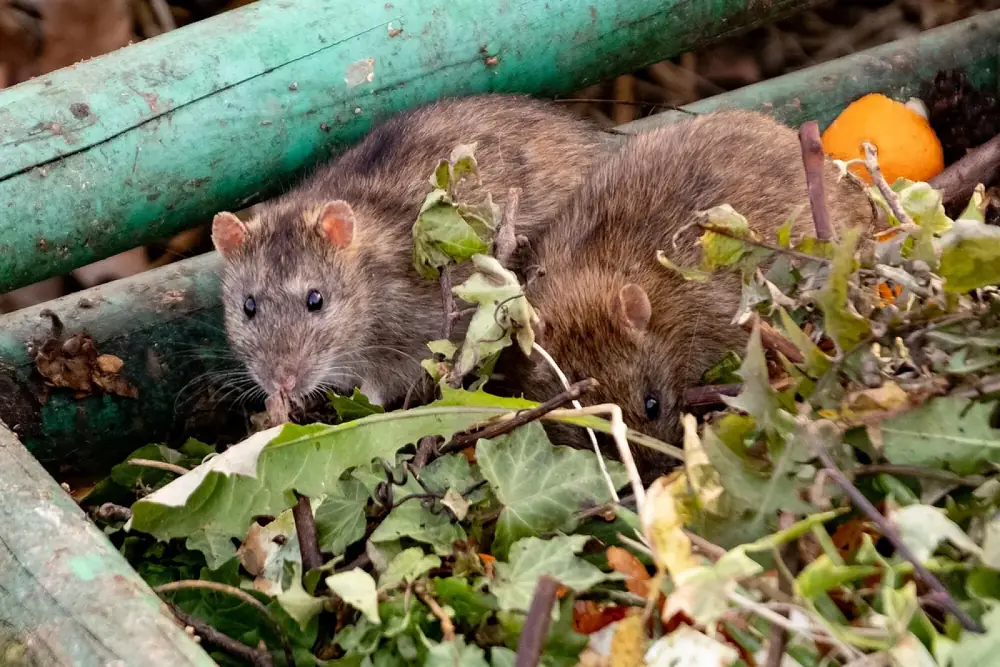
Three rodents account for almost all our calls here. The brown rat is big and heavy, digs burrows under slabs and along walls, and travels through drains. It's the one we find most in industrial yards and around refuse areas. The roof rat is slimmer and climbs; it lives in ceilings, roof voids and the top of stacked goods. The house mouse is small enough to get through a gap the width of a pencil and is the classic pest of storerooms, offices and kitchens. Droppings tell them apart: rat droppings are about the size of a raisin, mouse droppings more like a grain of rice. For more on rats specifically, see rat control for southern homes.
What a rodent programme for a business involves
- Site survey. We walk the building and the yard, inside and out, and note harbourage, food sources, drains, doors and gaps.
- Station plan. Lockable, tamper-resistant bait stations go around the outside perimeter and along fences; traps go inside, especially in food handling and storage areas where bait isn't appropriate.
- Proofing. We give you a list of what to close: door sweeps on roller doors, gaps around pipes and cables, damaged air bricks, holes in ceiling boards.
- Scheduled visits. On a monitoring contract we check and service every station, record activity and update the plan.
- Records. You get a service record and station map for every visit, ready for an auditor, a client or a health inspector.
Signs on a commercial site
- Droppings along walls, behind pallets and under racking
- Gnawed corners on boxes, bags and packaging, or spilled product on the floor
- Burrows along the edge of slabs, fences and refuse areas
- Greasy marks on pipes and beams in the roof or along the top of walls
- Staff reporting sightings at shift change, when the building goes quiet
Homes in the south
For households the job is smaller but the logic is the same. We bait outside in lockable stations where children and pets can't reach, trap in the ceiling, and show you the entry points. In older semis with shared roof spaces it often helps to treat both sides at once, because a rat in one roof will be in the next one by the weekend.
The mistake that keeps sites infested
Loose poison sachets thrown behind pallets or into a ceiling. They're picked up by the wrong animals, rats carry them off and stash them, and when a rat dies in an inaccessible spot the smell lingers for weeks. Worst of all, there's no record of what was placed or whether it was eaten, so nobody knows whether the problem is shrinking or growing. Stations in fixed positions, checked on a schedule, tell you exactly that.
A tip for southern yards
Keep a clear strip, about half a metre wide, between stored goods and the walls, and stack pallets off the ground. Rats like to travel along walls under cover. If they can't do that without being exposed, they're less likely to settle, and our stations along the walls catch the ones that try.
What rodent control costs, and why
For businesses, the price is set by the size of the site, the number of stations needed, how often we visit and how much proofing is required. A small shop on a monthly visit is quite different from a large warehouse with a yard. For homes, it depends on how many stations go outside, whether we work in the roof and how many follow-ups it takes. We quote after a site visit, and our pest control price guide shows the starting points.
Rodents are often only part of the picture. Food businesses usually need cockroach treatments in Johannesburg South on the same contract. If you have sites elsewhere, we also run rodent programmes in Soweto and rodent control across Johannesburg, and our Selby pest control page covers that industrial node in more detail.
We're SAPCA registered and registered with the Department of Agriculture under Act 36, with 25 years of pest control behind us, and we offer service within 24 hours. Treatments carry a 3-month guarantee. To set up a site visit, call 084 200 2700, or WhatsApp us a photo of the droppings or damage.
Questions we get asked
How much does a rodent control contract cost?
It depends on the size of the site, the number of bait stations and how often we visit. We survey the site first and quote a monthly or scheduled programme to suit it.
Do you provide records for audits and health inspections?
Yes. Every visit is recorded, with a station map and notes on activity and proofing, so you can show exactly what's been done.
Are bait stations safe around staff and visitors?
Yes. They're lockable and tamper-resistant, fixed in place, and the bait sits inside where hands and pets can't reach it.
Can you use poison in a food storage area?
We avoid bait in food handling and storage areas and use traps there instead. Bait stations go outside and along the perimeter.
How long before we see results?
Most sites see activity drop within a few weeks once stations are in and the worst gaps are closed. Heavily infested sites with lots of cover take longer and need regular visits.
We had rats removed before. Why are they back?
Usually because the entry points and cover were never dealt with, or nearby land still holds a population. Proofing and ongoing monitoring stop the cycle.
Do I need to close the business while you work?
No. We work around your trading hours and the treatments don't require anyone to leave the premises.