
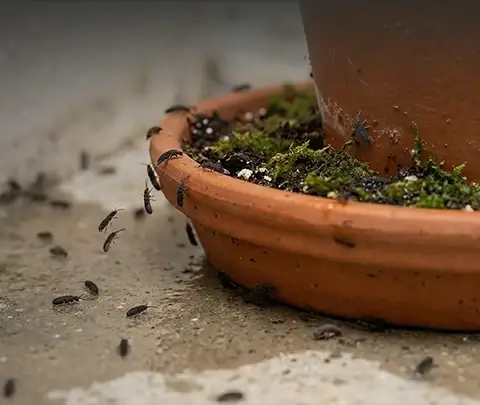
Crawling insect control in Johannesburg covers the pests that walk into your home rather than fly: cockroaches, ants, fishmoths, carpet beetles and booklice, plus the spiders, scorpions, centipedes and millipedes people group with them. We find where each one hides, treat those cracks and voids with baits or residual barriers, and close the routes they use to get inside.
The crawling pests we see most
Cockroaches
Small, light-brown German cockroaches live in kitchens, inside appliance motors, door hinges and cupboard joints, and they breed fast in flats, restaurants and any warm kitchen. The large, reddish American cockroach comes up from drains, sewers and manholes, mostly on summer nights. They need different treatments, so knowing which one you have comes first. Our cockroach control in Johannesburg page covers both in detail.
Ants
Ants are the classic pre-storm visitor, streaming in along paving joints, window frames and skirting boards just before the summer rains. Spraying the trail kills the foragers but leaves the nest and its queens untouched, which is why we use baits the workers carry home. See ant treatments across the city.
Fishmoths, booklice and carpet beetles
These are the quiet ones. Fishmoths eat starch in paper, wallpaper paste, book bindings and clothing, and like dark, slightly damp cupboards and garages. Booklice feed on mould in damp paper and stored food. Carpet beetle larvae chew natural fibres in rugs, wool clothing and upholstery, and leave small, irregular holes that are often blamed on moths.
Spiders, scorpions, centipedes and millipedes
Strictly speaking not insects, but crawling pests all the same. They come in from rockeries, wood piles, compost and the veld at the edges of the city, especially on the ridges and in newer estates built on open land. Most are harmless; some can give a painful sting or bite.
Why crawling pests do well in Johannesburg
Older homes give them gaps: shrunken skirting boards, cracked plaster, timber floors with spaces underneath, original plumbing with loose collars. Blocks of flats give them shared walls, ducts and refuse rooms, so a cockroach population in one kitchen soon spreads to the rest of the floor. Newer estates on former veld bring scorpions, spiders and millipedes in from the open land next door. And the city's summer rain floods ant nests and drives them indoors every year.
How we treat crawling insects
- Inspect the hiding places. Behind and beneath appliances, under sinks, inside cupboard hinges and drawer runners, along skirting boards, in cracks around pipes, and outside along the foundations and paving.
- Treat for the species. Gel baits into the cracks where German cockroaches live, ant baits on active trails, a residual treatment in drains and around manholes for American cockroaches, and barrier treatments around the perimeter for spiders, scorpions and millipedes.
- Stop the way in. We point out the gaps to seal: under doors, around pipes and cables, broken air bricks and drain covers.
- Follow up. Heavy cockroach infestations need a second visit to deal with nymphs that hatch from egg cases after the first treatment.
Our sprays are odourless and won't stain. You don't need to leave home; just keep children and pets off treated surfaces until dry.
Blocks of flats and complexes
Crawling insects use buildings the way people use corridors. In a block of flats, German cockroaches move through the gaps around plumbing stacks, electrical conduits and the backs of kitchen units that share a wall, and refuse rooms feed them all. Treating one flat on its own pushes some of them next door, and they're back within weeks. The approach that works is a coordinated treatment of every unit on a floor or in a block, plus the refuse areas and service ducts, arranged through the body corporate or managing agent. Owners then get a short list of things to do in their own kitchens.
The mistake that spreads cockroaches
Using a bug bomb or fogger for German cockroaches. The mist doesn't reach into the cracks where most of them hide, and the ones it irritates move deeper into walls or into the flat next door. Worse, it contaminates the surfaces where bait would have worked. If you've already set one off, tell us, so we can plan around it. The step-by-step article on getting rid of cockroaches explains what does work.
A local tip
Pull the fridge and stove out from the wall once a season and clean underneath and behind them. In Johannesburg kitchens, the warm space around the fridge motor is the single most common cockroach hiding place we find, and the crumbs under the stove keep them fed.
What it costs and why
Crawling insect treatments are priced on the type of pest, the size of the property and how heavy the infestation is. A house with a few ants or a light cockroach problem is a modest job. Restaurants, blocks of flats and food factories take more time and usually need follow-up visits or a monitoring contract. Treating a whole complex together costs more upfront than one unit, but it's the only way cockroaches stay gone. Check the starting prices for treatments, and if you're finding one millipede a week after rain, a broom and a sealed door gap may be all you need.
Further reading
The crawling insect guide goes into the life cycles and habits of each pest, and our article on identifying ant activity helps you tell a passing trail from a nest in the wall.
Combat Pest Control, owned and run by Jason van Heerden, is SAPCA registered, registered with the Department of Agriculture and backed by 25 years in pest control. We offer service within 24 hours, and if the treated pest returns within 3 months we come back. Call 084 200 2700, or WhatsApp us a photo of what's crawling around.
Questions we get asked
How much does crawling insect control cost?
It depends on the pest, the size of the property and how bad it is. A light ant or cockroach problem in a house is a modest job; restaurants and whole complexes cost more. Our price guide shows where it starts.
How long before the cockroaches are gone?
Most homes see a big drop within one to two weeks. Gel bait works through the colony, and a follow-up visit deals with young that hatch from egg cases after the first treatment.
Why do ants come in before it rains?
Rising humidity and flooding nests push ants to move and forage indoors. Baiting the trail lets the workers carry the bait back to the nest and the queen.
Do I need to empty my kitchen cupboards?
For gel baiting, usually not. For a spray treatment we'll ask you to clear the cupboards under the sink and along the affected walls so we can reach the cracks.
Is it safe for children and pets?
Yes. Gel baits go into cracks and hinges out of reach, and sprays are applied where children and pets don't normally go. Keep them off treated surfaces until dry.
Are scorpions in Johannesburg dangerous?
Most species found around Johannesburg give a painful sting rather than a dangerous one, but some people react badly. Anyone stung who feels unwell should get medical help.
What should I do before the treatment?
Stop using sprays a day or two beforehand, wipe up spills and crumbs, and leave the areas where you've seen activity accessible.